Clean Room Classification and Application Guide
author: HKJH
2026-01-27

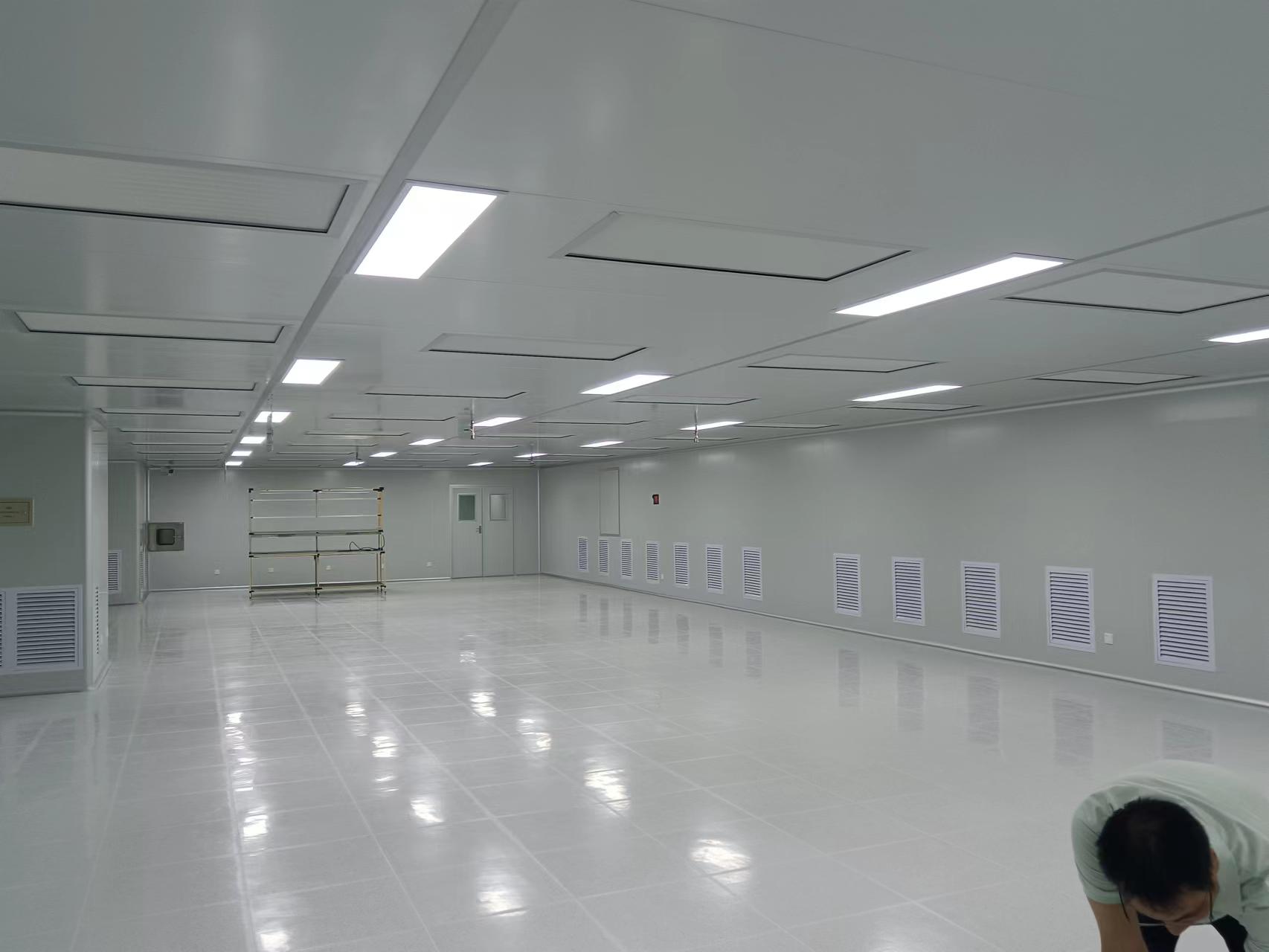
In fields such as semiconductor chip manufacturing, biopharmaceutical R&D, and precision electronic production, there is a "invisible yet crucial" core scenario—the clean room. It is not merely a "clean room", but a specialized space where parameters like airborne particles, microorganisms, temperature and humidity are controlled through a rigorous air purification system. And the key to determining a clean room’s contamination control capability lies in its classification grades.
I. First, Understand: How Are Clean Room Grades Defined?
Clean room grades are not subjectively defined, but comply with internationally recognized standards (e.g., ISO 14644-1) and national standards (e.g., GB/T 25915.1), with the core criterion being the number of airborne particles per unit volume.
Simply put: the smaller the grade number, the fewer particles allowed, and the higher the cleanliness level.
For example, a Class 100 clean room means the number of particles with a diameter ≥0.5μm (micrometer) in each cubic meter of air does not exceed 100; by contrast, a Class 100,000 clean room allows up to 3.52 million particles under the same standard—a difference of more than 35,000 times in cleanliness!
In addition to particle count, certain industries (e.g., pharmaceuticals, food) impose additional requirements for microbial control (e.g., colony-forming units). However, the core grading logic remains based on particle concentration.
II. Breakdown of Commonly Used Grades: Varying Application Scenarios from Highest to Lowest Cleanliness
Currently, the most commonly used clean room grades in the industrial sector are primarily Class 100, Class 1000, Class 10,000 and Class 100,000 (Note: corresponding to ISO Class 5 to Class 8 in the ISO standard—different designations but consistent core indicators). Different grades cater to distinct production needs; choosing an inappropriate grade will not only drive up costs but also risk product scrappage.
1. Class 100 Clean Room (ISO Class 5): The Highest Cleanliness Grade for "Near-Zero Particle" Protection
Core Indicators: ≤100 particles (≥0.5μm) and ≤0.3 particles (≥5μm) per cubic meter of air (almost no large particles); temperature control precision of ±0.1℃ and humidity control of ±2%, preventing any environmental fluctuations from affecting products.
Core Indicators: ≤100 particles (≥0.5μm) and ≤0.3 particles (≥5μm) per cubic meter of air (almost no large particles); temperature control precision of ±0.1℃ and humidity control of ±2%, preventing any environmental fluctuations from affecting products.
Purification System: Requires laminar air flow purification (air flows at a constant vertical or horizontal speed, removing particles like an "air curtain"), combined with High-Efficiency Particulate Air (HEPA) filters and Ultra-Low Penetration Air (ULPA) filters, with an air change rate as high as 200-500 times per hour (compared to only 1-2 times for a regular office).
Typical Applications: Lithography and wafer bonding in semiconductor chip manufacturing (micron-level circuits cannot tolerate any particle interference); cell culture and vaccine lyophilization in biopharmaceuticals (microbial contamination can render entire batches of products invalid); assembly of precision aerospace components (e.g., satellite sensors, where particles may cause equipment malfunctions).
2. Class 1000 Clean Room (ISO Class 6): The "Standard" for High-Precision Manufacturing
Core Indicators: ≤1,000 particles (≥0.5μm) and ≤3 particles (≥5μm) per cubic meter of air; temperature and humidity control precision of ±0.5℃/±3%, meeting the needs of most precision manufacturing processes.
Core Indicators: ≤1,000 particles (≥0.5μm) and ≤3 particles (≥5μm) per cubic meter of air; temperature and humidity control precision of ±0.5℃/±3%, meeting the needs of most precision manufacturing processes.
Purification System: Laminar air flow purification as the main solution, with turbulent air flow purification for local areas; air change rate of 150-250 times per hour, primarily using HEPA filters.
Typical Applications: Coating and packaging of LCD/OLED panels; production of artificial joints and cardiac stents in medical devices; assembly of optical lenses and laser devices (particles can affect light transmittance and imaging quality).
3. Class 10,000 Clean Room (ISO Class 7): The "General Grade" for Electronics and Pharmaceuticals
Core Indicators: ≤10,000 particles (≥0.5μm) and ≤30 particles (≥5μm) per cubic meter of air; temperature and humidity can be adjusted according to process requirements, with a control precision of ±1℃/±5%.
Core Indicators: ≤10,000 particles (≥0.5μm) and ≤30 particles (≥5μm) per cubic meter of air; temperature and humidity can be adjusted according to process requirements, with a control precision of ±1℃/±5%.
Purification System: Turbulent air flow purification as the main solution (air diffuses into the room after passing through filters to remove particles); air change rate of 50-100 times per hour, with lower costs than Class 1000 and Class 100 clean rooms.
Typical Applications: PCB soldering and chip packaging/testing in the electronics industry; production of oral solid preparations (e.g., tablets, capsules) in the pharmaceutical industry; processing of high-end health products and aseptic food in the food industry (e.g., infant formula milk powder).
4. Class 100,000 Clean Room (ISO Class 8): The "Entry-Level" for Basic Cleanliness Requirements
Core Indicators: ≤100,000 particles (≥0.5μm) and ≤300 particles (≥5μm) per cubic meter of air; relatively relaxed temperature and humidity control, mainly meeting the requirement of "no visible dust".
Core Indicators: ≤100,000 particles (≥0.5μm) and ≤300 particles (≥5μm) per cubic meter of air; relatively relaxed temperature and humidity control, mainly meeting the requirement of "no visible dust".
Purification System: Turbulent air flow purification with an air change rate of 15-30 times per hour; only HEPA filters are required, resulting in the lowest construction and operation costs.
Typical Applications: Assembly of automotive electronics (e.g., on-board chips, sensors); production of high-end skin care products and cosmetics (avoiding dust from affecting product texture); manufacturing of non-sterile medical devices such as face masks and protective clothing.
III. Key Reminder: Choose the Right Grade, and Ensure Proper "Maintenance"
Many enterprises assume that "once a clean room is built, everything is fine". In reality, cleanliness grades are dynamically maintained—poor maintenance will lead to a rapid drop in cleanliness:
Regular Testing: Use a particle counter to detect particle concentration monthly; inspect filter tightness quarterly (to prevent air leakage); replace HEPA filters annually (service life of approximately 1-2 years).
Personnel Management: All personnel entering the room must wear dedicated clean room garments (full-body coverage including hair and shoes) and pass through an air shower (high-velocity air removes particles from the body); no dust-generating items (e.g., paper documents, cosmetics) are allowed inside.
Equipment Maintenance: Production equipment in the room must be cleaned regularly to avoid oil and dust accumulation; ventilation ducts should be cleaned every six months to prevent microbial growth.
IV. Summary: Do Not Blindly Pursue "High Grades"—Suitability Is the Best Choice
The core principle for selecting a clean room grade is to match process requirements:
If the production process is extremely sensitive to particles (e.g., chips, vaccines), Class 100/1000 is a must;
If only basic cleanliness is required (e.g., automotive electronics, skin care products), Class 100,000 is sufficient.
Blindly pursuing high grades will lead to a sharp increase in construction costs (Class 100 is 5-10 times that of Class 100,000) and operating costs (electricity, maintenance fees), which will instead impact enterprise benefits.
If your enterprise is planning a clean room, it is advisable to first clarify the particle requirements of core processes, then select the appropriate grade based on the budget—after all, precision cleanliness is the core value of a clean room.
Decomposition of the project process for a dustfree workshop
Uganda Cleanroom Construction Project Successfully Completed!